Total Pageviews

Thursday, November 22, 2007

A Bing Crosby Holiday

Bing Crosby sang hope-filled songs about home and even grew the nostalgia into a hit film, White Christmas. But, anthropologists tell us that home is not only place, but it is also about kinship. It is about having both a place in time as well as enjoying a psychological bonding in familial relationships. Unfortunately, since the 1960s - the dawn of the commercial jet age, Americans have progressively lost a personal sense of their family’s homestead, kinship and homeland. The Boeing 747, then later the computer, Internet and digital ages jettisoned us into a world of transience and future shock. Jobs, careers, people, places, houses, apartments, knowledge and things now move through our lives at an alarming rate. Sinking roots into one place is no accident that many find difficult to achieve.

More and more, Americans are suffering from emotional homelessness and in some cases physical as well. Fr. Rolheiser in his book, Against an Infinite Horizon states, “When we have no place to identify with, no roots to drink from, no tree trunk to give us clear direction, it is no accident that on any given day we can sincerely wonder who we really are, what our values are … and which of our seeming multiple personalities is our true one. From lack of home we suffer schizophrenia, dislocation, and much loneliness, both psychologically and morally. “

In the 21st century, still many long for the fulfillment of Bing Crosby’s song “I’ll be home for Christmas” because it speaks to their roots. The reality is that most will never be mentally home for the Holidays (because of arguments and discord) – and others still will never be really home because of actual physical homelessness. In either case, mental or physical, the end result is the same – loneliness, depression, anxiety and restlessness.

What is the good news in all this? Is there any? Most definitely, yes! It is our very homeless condition that God uses to call us to Himself. Our roots, our homeland and the rest that we seek in our agitated aloneness are ultimately found when in our desolation we are filled by being in a relationship with the Lord Jesus Christ. Jesus said, “Come unto me all you who labor and are heavily burdened, and I will give you rest.” Twelve distinct times our Lord Jesus said, "I Am," with reference to Himself. He said, “I am the way, I am the truth, I am the life, I am the resurrection, Before Abraham I am, I am the bread of life, I am the light, I am from above …” How much more do we need to hear? Jesus is clearly telling each of us, "Come to me" (to no one else and nothing else) because, “I am your home.”

Please scroll down and vote in the polls. Your opinion counts!
HIA is on Holidays and returns to publishing on Monday.

Wednesday, November 21, 2007

A Thanksgiving Table Prayer

A Thanksgiving Table Prayer

Let us pray ... O God, Source of all that makes life possible, Giver of all that makes life good: We pray now to give thanks, yet we confess that we have often failed to live our thankfulness. What we have, we take for granted, and we grumble about what we lack. We have squandered your bounty, with little thought for those who will come after us. We are troubled by the few who have more than by the many who have less. Forgive us, O God. In this moment of prayer, accept our thanksgiving; and teach us to make gratitude and sharing our way of life. Amen

In this Season of Thanksgiving, some have asked, "How can I help?"
It is estimated that there are 74,000 homeless children, teens, women and men living on the streets of Los Angeles. You can help provide approximately 5,000 meals a month to our brothers and sisters in need. Your help also supports a special team reaching out to 500 homeless people living under bridges and in alleys - providing food, socks, jackets, blankets, jeans, t-shirts, water, soap, prayer cards and rosaries. Every donation helps - however great or small. Thank you for your compassion.


St. Peter's Church
1039 North Broadway
Los Angeles, CA 90012

Attn: Homeless in America - GJG


Tuesday, November 20, 2007

Food Pantries Stuggle with Shortages

Associated Press writers Dan Sewell in Cincinnati and Doug Whiteman in Columbus, Ohio, reported yesterday that free food banks say they are seeing more working people needing assistance. The increased demand is outstripping supplies and forcing many pantries and food banks to cut portions. "I've been doing this for 20 years, and I can't believe how much worse it gets month after month," said Lisa Hamler-Fugitt, executive director of the Ohio Association of Second Harvest Foodbanks.

People are working full-time, that's not the problem - they just can't afford to live. One customer, Diana Blasingame has lately found herself having to go to a free food pantry once a month to feed herself and her teenage daughter. "I'm pretty good at making things stretch as far as I can, but food is so high now and I have to have gas in my car to do my job," said Blasingame, 46, who earns $9 an hour as a home health aide. "I work full time, but I don't have health insurance and sometimes there just isn't enough to pay bills and buy food."

"We have food banks in virtually every city in the country, and what we are hearing is that they are all facing severe shortages with demand so high," Ross Fraser, a spokesman for America's Second Harvest — The Nation's Food Bank Network, the nation's largest hunger relief group, said Friday. "One of our food banks in Florida said demand is up 35 percent over this time last year."

Please scroll down and vote in the polls. Your opinion counts!

Monday, November 19, 2007

Come, Clothe Yourself with Compassion

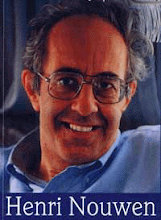
"Compassion is something other than pity. Pity suggests distance, even a certain condesendence. [When] I give some money to a beggar on the streets of Toronto or New York City, but I do not look at him in the eyes, sit down with him or talk with him, I am really too busy to really pay attention to the man who reaches out to me. My money replaces my personal attention.

"Compassion means to become close to the one who suffers. But we can come close to another person only when we are willing to become vulnerable ourselves [and to admit to failures, brokenness and shortcomings]. This is perhaps, the main reason that we sometimes find it easier to show pity than compassion. The suffering person calls us to become aware of our own suffering. How can I respond to someone's loneliness unless I am in touch with my own experience of loneliness? How can I be close to handicapped people when I refuse to acknowledge my own handicaps? How can I be with the poor [and homeless] when I am unwilling to confess my own poverty?" by Henri Nouwen

Sunday, November 18, 2007

More than 15 days of Homeless Woes for California – 30 Days of Woes Worldwide


Apocalyptic-style fires, floods and winds have recently left millions of global village citizens homeless. In an eerie wave of natural disasters, homelessness unexpectedly came knocking, striking nearly 3 million people worldwide in the past 30 days. From raging wildfires to churning floods and hurricane force winds - natural phenomena left few options for everyone caught in its path but to pray and to mourn their loss. From the very rich to the very poor, few could escape.

Here is a recap as to how homelessness suddenly overcame so many - so unexpectedly and in a very short amount of time:

On October 20, 2007, more than 15 days of woes were unleashed upon residents of Southern California. Nearly 1 million people experienced homeless conditions when wildfires swept through affluent real estate developments from Malibu to San Diego. The last fire was reportedly contained by November 9, 2007.

On November 2, 2007, similar woes were unleashed upon residents of Southern Mexico; but this time it was not by fire, but by water. Nearly 1 million people are still homeless from the worst floods ever in the state of Tabasco.

On November 17, 2007, Bangladesh experienced its worst cyclone since 1991. Winds, clocked at more than 150 mph shredded millions of tin homes and shacks in to rubble. 1 million are presently left homeless and destitute with no immediate housing solution available. More than three-thousand residents of this already impoverished country are dead.

Saturday, November 17, 2007

Gay Teens - 42% of Homeless Teenagers

Between 1.3 and 2.8 million runaway and homeless youth live on the streets of America each year. A disturbing fact about this group is that at least 42% of homeless youth are lesbian, gay, bisexual or transgender (LGBT), a disproportionately high number when one considers that only 3 to 5% of the U.S. population identifies as LGBT. How is that possible? Unfortunately, most of these teens report a higher incident rate of having had experienced child molestation as well as adults and peers around them who have been abusive and unaccepting.

At school, kids with any hint of gay characteristics (straight or gay) get harassed and bullied by their peers, and even by teachers and other staff members. 50% of kids who speak openly with their parents are met with alienation and negative consequences, such as being punished, ignored, mourned, insulted or physically abused. One homeless girl reported being threatened with a gun by her father to change, and another girl was raped by a family "friend" who wanted to "straighten” her out.

But out on the streets, things are not much better. Many kids report that, when bullied by other kids in teen shelters - staff members just looked away. Unfortunately even some faith-based shelters flee from Christ’s message of mercy and compassion by unabashedly not admitting kids that are gay. It is safe to say that these kids are both rejected and despised. Who does that sound like?

As Christians we have a responsibility to caringly protect and support all young people. It is never considered merciful to turn one's head when a child or teenager is being bullied or harassed by peers. It is never compassionate to force a child or teen to leave their school, youth group, church, or especially their own home, because of their sexual orientation. Regardless of how an individual feels about the issue of homosexuality, every kid... and every person, for that matter... should be treated empathetically with Christ’s compassion.

___

More on the Internet:

http://www.zimbio.com/

Friday, November 16, 2007

Saint Margaret of Scotland - The “Messy Way” to Serve the Poor

Saint Margaret of Scotland was actually born in Hungary. King Malcolm befriended her family in 1070 and was captivated by her beauty. Margaret married the King of Scotland in that same year at a fairytale wedding in the castle of Dunfermline in Fife, Scotland. Margaret’s claim to beauty was not her title as Queen of Scotland or even her personal elegance. Margaret clothed herself with royal compassion for the poor. Her life testified to the fact that personal wealth and power is actually a call to serve.

Although having access to all material goods, Margaret remained detached from the world. Her private life was austere. She had certain times for prayer and reading Scripture. She ate sparingly and slept little in order to have time for devotions. She and Malcolm kept two Lents, one before Easter and one before Christmas. During these times she always rose at midnight for Mass. On the way home she would wash the feet of six poor persons and give them alms. She was always surrounded by beggars in public and never refused them help. It is recorded that she never sat down to eat without first feeding nine orphans and 24 adults in her household.

One blogger said this about Margaret … “There are two ways to be charitable: the ‘clean way’ and the ‘messy way.’ The ‘clean way’ is to give money or clothing to organizations that serve the poor. The ‘messy way’ is dirtying your own hands in personal service to the poor. Margaret's outstanding virtue was her love of the poor. Although very generous with material gifts, Margaret also visited the sick and nursed them with her own hands. She and her husband served orphans and the poor on their knees during Advent and Lent. Like Christ, she was charitable the ‘messy way.’”

Thursday, November 15, 2007

Anonymous Chatter in the Mourning

M.F. set off some anonymous responses (see Rejoice in the Mourning, Friday, November 9, 2007) with the post, "Sometimes, it doesn't feel like God is with you. When things are going wrong, it feels like He abandoned us. I truly wish I could be rejoicing now in my mourning for myself...

Anonymous said...
"M.F. it seems as though the American value "God shed His grace on thee ... From sea to shining sea..." has set up false expectations in U.S. Christians. The reality is that Jesus said, "Take up your cross and follow me." Jesus is in the night. Our wills are crushed in the mourning and we are sanctified in it to see God."

Anonymous said...
"I don't think I really understand this concept of mourning for choices (Good choices in some cases) that I might have made. Can you explain? Why should I mourn that I cannot marry a million others? It's a decision I made knowingly and I don't feel the need to examine. And frankly, I don't want to marry anyone else. I am missing something here, can you explain?"

Anonymous said...
"Possibly Fr. Rolheiser is referring to loss rather than choices. In this life we 'count everything as loss' as Paul says in order to gain Christ. The Apostle may be telling us that when we take the interior journey to the Infinite God it appears as though we are driven to mourn or “count as loss” everything in this life. We read in Scripture: 'Blessed are they that mourn, they shall be comforted.' Also, 'He has turned my mourning into dancing.'"

Wednesday, November 14, 2007

"Marlboro Marine" Model of the Modern Veteran

Times photographer Luis Sinco made James Blake Miller, a.k.a. Marlboro Marine an emblem of the war. The shot (right) was taken during a formidable battle sustaining major loss of life. His face, smeared with war paint, blood trickled from his right ear and the bridge of his nose. Deafened by canon blasts, Miller was not aware that the shooting had stopped. Sinco said, “His expression caught my eye. To me it said: terrified, exhausted and glad just to be alive. I recognized that look because that’s how I felt too.” Sinco sent the photo back to the U.S. as the last photo of many in his daily report. Almost instantly, the photo was emailed around the world and was published in more than 100 newspapers. Miller became an icon overnight.

“Miller, get your ass up here,” a first sergeant reportedly remarked a few days after the photo was taken. Maj. Gen. Natonski was waiting to see him. The Major barked, “America has connected with this photo. Nobody wants to see you dead or wounded. We can have you home tomorrow.” Meanwhile his company continued a major assault in Fallujah leaving nearly 100 Americans dead, 450 wounded and 1,200 bodies of insurgents lying on the streets.

One year and half later, Sinco, for the first time since the photo was taken met up with Miller in the U.S. Instead of discovering just a model of heroism, he also found a model of the broken soldier. Miller was haunted by the brutality of the fighting. Realizing that relationships and even general stability in life were problematic, he had agreed to check into a veterans mental health program. Miller would have to cover the cost of housing - $300 a month for room and board. But soon he dropped out of the program and believed that he would be happier in the West Virgina mountains where had always found solace.

After a wedding and honeymoon, Miller was having difficulties. In November 2006, it was now one year and half since Miller had left the Marines. He lived in an empty apartment where a wedding picture was replaced by a Meritorious Mast. So much for happy endings. And so we pray for the priceless life that Miller gave, but also prayers that he and his comrades will recover their on-going lives too. We pray for the many veterans (approximately one third of all homeless) who continuously struggle to live in their brokenness and poverty - some now for decades.
___

More on the Internet:

http://www.LAtimes.com/

Tuesday, November 13, 2007

The Making of an American Saint - Frail, Feeble & Powerful

Frail but empowered by the Spirit, Saint Frances Xavier Cabrini is celebrated today as both an immigrant and the first U.S. citizen to be canonized a saint. Feeble in health all her life, she was denied admittance into religious life. However, that did not stop Frances. Sent by a local bishop to reform House of Providence orphanage, she went on to start one of the first orders of women missionaries with just seven orphans. She founded Missionaries of the Sacred Heart. For the next 28 years she took the Americas by storm establishing schools, hospitals and orphanages from the U.S. to Argentina, Brazil and Nicaragua. She also founded houses in England, France and Spain. Her love for Christ was expressed in a visible compassion for the poor, homeless-migrant, the sick and the uneducated.

Deuteronomy 10:17-19 comes to mind when reflecting upon the life of Saint Frances Xavier Cabrini: “The Lord, your God is the God of gods, the Lord of lords, the great God, mighty and awesome, who has no favorites, accepts no bribes, who executes justice for the orphan and the widow, and befriends the migrant, feeding and clothing him. So you too must befriend the migrant, for you were once aliens yourselves in the Land of Egypt.”

We are inspired to pray …

May we see and serve you Lord, in the sick, the suffering and the sorrowful.

May we know you in the poor, the uneducated and the unloved.

May we love you in the unwanted, the bereaved, the homeless, the migrant and the refugee.

May we be thankful for the basics of food, water clothing and shelter.