Total Pageviews

Thursday, November 19, 2009

Love is Greater than Faith

"And now these three remain: faith, hope and love. But the greatest of these is love." 1 Corinthians 13:13

Faith is very important, however even Scripture says that love is greater than our faith! Do we really believe that? Do we live that way?

Do we live our lives making love more important than our faith? Do we routinely show mercy to others, do we go out of our way to give charity to co-workers, do we take extra time to serve the poor in our homes and neighborhood and do we love the least by giving them food, water, clothing and shelter?

"For in Christ Jesus . . . The only thing that counts is faith expressing itself through love." Galatians 5:6
_______________

Please take a moment to donate online to Homeless In America’s Thanksgiving StreetReach for homeless living under the bridges and in alleyways. There is always a need for water sponsors, $10 - food sponsors, $20 and monthly sponsors are needed for van insurance $30 and operation/upkeep $100. God bless you for your compassion and help for the 1,000s of homeless men, women and children we serve. Share love, kindness and compassion in increments of $10 at - http://www.servantsofthefather.org/donation_homeless

Sunday, November 15, 2009

How God Uses Poverty, Injustice and Extreme Evil

Lord Jesus, in your poverty, You were so cruelly treated at the crucifixion that every drop of your blood and every drop of water in your body was poured out on the earth. The lacerations, the crown of the thorns, the nails in your hands and feet and piercing of your side left no doubt in anyone’s mind that You were dead. The very marrow of your bones withered up and You expired. Your torturers blatantly exalted evil to its highest degree, to the point that your death was obvious to everyone. It was clear and final. And yet, God your Father used the cruel evaporation of your body and obvious death to erase all doubts surrounding your resurrection. Poured out and spent on Calvary, and witnessed by all, no one could say that at the resurrection, or for that matter ages to come, “He somehow survived his torturers” or “He was nurtured back to life by crafty disciples.”

Isn’t it just like You O God to take extreme evil and because You are God, you can create an extreme good from it? You O Lord foreknew the coming resurrection and those torturers' game of extreme torment and death played right into your hands. Through their culture of inexplicable death, You used their actions to erase all doubt surrounding the soon coming resurrection. And You not only used their evil to erase all doubts then, but for all ages to come and even now.
_______________

Please take a moment to donate online to Homeless In America’s Thanksgiving StreetReach for homeless living under the bridges and in alleyways. There is a need for water sponsors, $20 - food sponsors, $125 and monthly sponsors are needed for van insurance $50 and operation/upkeep $300. God bless you for your compassion and help for the 1000s of homeless we serve. Donate kindness and compassion in increments of $10 at - http://www.servantsofthefather.org/donation_homeless

Saturday, November 14, 2009

How Should We Think About the Poor?

On March 26, 1991, Bishop Kenneth E. Untener of Saginaw, Michigan, issued a “decree” that from that day forward, until July 1, 1991, all meetings held under Church auspices, at the parish or diocesan level, no matter what their purpose, must begin with the agenda item - "How shall what we are doing here affect or involve the poor?" The following are his reflections (briefly digested here at Homeless In America) as he looks back on the decree. The decree on the poor was in effect for 97 days.
by
Bishop Kenneth E. Untener

Never in my life had I talked about and listened to so much about the poor. On some days I had four or five meetings, and each began with "the poor".

I learned a lot, not only about the poor, but also about us, and how we think about (or don't think about) the poor. Believe me, I am no expert on the poor. But I learned eight things in particular during those 97 days.

1) We tend to forget the "poor" poor.

A typical scenario goes like this . . . The chairperson begins the meeting by saying something like, "Well, the bishop has asked that we begin each meeting with a discussion about how this affects or involves the poor. So we're going to spend a few minutes doing that. I'll throw it open for anyone who would like to say something."

Silence.

Then someone says, "Well, people can be poor in a lot of different ways. There are some people, for example, who don't have friends, and they are poor."

I interrupt. "I agree with you. But this decree has to do with the 'poor' poor. They are the ones who get left out, because they're usually not part of what we did yesterday or today. The 'poor' poor are the ones who rarely if ever are first on an agenda. So let's talk about them."

Mental note: Always start with the "poor" poor.

2) The poor are often "invisible."

The poor around us (as opposed to the ghetto, or some distant country) are often invisible. They aren't in our same "networks."

They aren't at the same gatherings.
They don't belong to councils or committees.
They don't always go to church (and if they do, they try hard not to look poor).
They don't bump into us at the mall or the supermarket.
Take tuition assistance at schools. We offer help for those who cannot pay full tuition—or cannot pay any tuition. But the poor often do not come forward. Why? It is announced in the parish bulletin. But the poor don't get the parish bulletin. [They are out of touch because they are so very poor.]

Mental note: It takes initiative and creativity to reach the poor.

3) The biggest problem is the "undeserving poor."

Place a child before us with a hungry face and ragged clothes and we jump at the chance to help. Poor children don’t make it hard to help the poor. Poor adults who have had bad luck don’t make it hard to help the poor.

The “undeserving poor” are the ones who make it hard to help the poor. They are the ones who seem to take advantage of the system, or other people. [But] help them anyway. If you start to distinguish between the deserving and the undeserving poor, you are finished—at least as far as the gospel is concerned. Who is really to decide if they are undeserving?

Mental note: If you're going to err, err on the side of generosity.

4) If you try to help the poor, you will sometimes get taken.

Every parish minister can tell stories of people who have come with a sad tale. You check it out very carefully, give them money—and later find out that they did the same thing at three or four neighboring parishes. Helping the poor has its risks. You will sometimes get taken.

Mental note: Learn to write off your losses.

5) Helping the poor is not always a pleasant experience.

It's no picnic helping the poor. There is often no feeling of fulfillment. It's work—like a lot of virtue is work—like taking care of an elderly parent is work.

The "poor" poor are not always so noble, and they are the hardest to deal with—which is probably why we don't.

Mental note: When you help the poor, you always receive more than you give—but it may not seem that way at the time.

6) Food baskets at Thanksgiving, toys at Christmas are good as far as they go—but they don't go very far.

People easily talk about direct help to the poor on special occasions—clothes, food, money. Those fine things shouldn't be taken lightly. But that is the easy part. The hard part is trying to do something about the poor's state in life.

The discussion always slowed when we tried to focus on this. Where do you begin? What do you do?

It's hard when you deal with the causes. How can we give them basic skills to manage their lives? What about health insurance? How do we help them find work? How do we help them find work that pays a living wage? Why are single parents, usually women, abandoned so easily by a spouse?

Mental note: Direct assistance is good. Tackling the causes is better.

7) Sometimes the poor are overwhelmed into inaction.

People who deal with the poor can tell a hundred stories about how they waste money and opportunities. You bring food to their home—and notice a large-screen TV. Whenever you visit, they are watching TV.

Why? Let’s try to put ourselves in their shoes.

It is a hopeless mess, [a big cluttered garage that you have wanted to clean for months or even years!] but today is the day you are going to tackle it. Getting started is the problem, because with a mess like that, there is no logical place to begin. [Like you] the poor can't get enough together even to get started—a down payment, transportation, protection from an abusive husband, an education.

Their life is like that all the time. It is too big a mess even to know where to begin. So they try to forget it by enjoying some "luxuries," having a beer, watching TV, etc.

Mental note: Don't judge their "laziness" too quickly.

8) The poor also help the poor.

People who work with the poor can tell a hundred stories about the “generous poor.” A family takes in a neighbor’s child without a second thought, because the child needs to be taken in somewhere. A person who has next to nothing gives money to someone who has nothing at all, simply saying, “Well, they need it more than I do.” A poor family in a small house takes in another family because they had their heat turned off in the dead of winter. Food is shared even though there isn’t enough to begin with.

Mental note: God loves a cheerful giver, which is one of the reasons why God loves the poor.
______________
What will you do with your Homeless in America?

VOTE – Scroll down & vote in the polls.
COMMENT – Daily insights, prayers, thanksgiving & praise.
SUBSCRIBE! –Top right column.
LIST – Yourself as a blog “Follower” middle right column.
INVITE – Friends and family to Subscribe!

http://www.homelessinamerica.blogspot.com/

Friday, November 13, 2009

This is our Prayer - "Have Mercy on Your People, Lord!"

For I was hungry and you gave me something to eat, I was thirsty and you gave me something to drink, I was a stranger and you invited me in, I needed clothes and you clothed me, I was sick and you looked after me, I was in prison and you came to visit me. Matthew 25:35


R Have mercy on your people, Lord!

+ For all the times we serve ourselves instead of serving You: R

+ May we learn to love You in the sick, the suffering and sorrowful: R

+ For all the times we remain comfortable and complacent while complaining and making our lives more complex: R

+ May we come to know You in the poor, the uneducated and the unloved: R

+ For all the times when we seek after things that bring no life, but drowsiness and death: R

+ May we love You in the unwanted, the widow, the migrant and the refugee: R

+ For all the times we have genuine need, may we find You in our community of faith: R
_____________

Please scroll down to the bottom of the page and vote in the polls. Invite your family and friends to Subscribe! top right column.

Wednesday, November 11, 2009

The Lowly are Pardoned but the Mighty are put to the Test

Wisdom!
Hear, therefore, kings, and understand; learn, you magistrates of the earth's expanse! Hearken, you who are in power over the multitude and lord it over throngs of peoples! Because authority was given you by the LORD and sovereignty by the Most High, who shall probe your works and scrutinize your counsels! Because, though you were ministers of his kingdom, you judged not rightly, and did not keep the law, nor walk according to the will of God, Terribly and swiftly shall he come against you, because judgment is stern for the exalted - for the lowly may be pardoned out of mercy but the mighty shall be mightily put to the test. For the Lord of all shows no partiality, nor does he fear greatness, because he himself made the great as well as the small, and he provides for all alike; but for those in power a rigorous scrutiny impends. To you, therefore, O princes, are my words addressed that you may learn wisdom and that you may not sin? For those who keep the holy precepts hallowed shall be found holy, and those learned in them will have ready a response. Desire therefore my words; long for them and you shall be instructed. Wisdom 6:1-11
Psalm 82
R Rise up, O God, bring judgment to the earth!

Defend the lowly and the fatherless;
Render justice to the afflicted and the destitute.
Rescue the lowly and the poor;
From the hand of the wicked deliver them. R

I said: “You are like gods,"
All of you sons of the Most High;
Yet like men you shall die,
And fall like any prince. R
_______________
Please take a moment to donate online to Homeless In America’s Thanksgiving StreetReach for homeless living under the bridges and in alleyways. There is a need for water sponsors, $20 - food sponsors, $125 and monthly sponsors are needed for van insurance $50 and operation/upkeep $300. God bless you for your compassion and help for the 1000s of Homeless we serve. Kindness and compassion in increments of $10 at - http://www.servantsofthefather.org/donation_homeless

Tuesday, November 10, 2009

Social Justice or Social "Injustice"?

In her book, Failing America’s Faithful, Kathleen Kennedy Townsend (daughter of Senator Robert Kennedy) builds a strong case that historically in America, both the Catholic and Protestant church have long traditions of social justice, charity and serving the poor. Throughout the 1800s - 1900s, the Catholic Church took up the responsibility of social justice with the establishment of 100s of hospitals, orphanages, the work of Mother Cabrini, Dorothy Day and more. In the 1960s, the Protestant Church with the backing of many Catholics took on the issue of civil rights and the poverty of minorities in America. They stood strong with Martin Luther King Jr. (a Southern Baptist) who found support with the likes of the Pope Paul VI and the President of the United States, John F. Kennedy (Catholic).

But have the past 25 years of trends in religion dethroned social justice to yield to social "injustice"? Have new trends taken the focus off charity and clouded the Gospel with judgment, self-righteousness and power leaving the modern-day church goer “fat, dumb and happy?”

Kathleen Kennedy (photo with Rev. Matt Malone) writes . . . “Not unlike those of the Catholic Church, the leaders of Protestant congregations have come to disregard the New Testament’s teachings on charity and justice and instead have focused their outrage on issues of sex and private conduct. Of course, these issues are not new to Protestant churches, especially Evangelical congregations. But the narrowness of the Protestant community, the moral myopia, is a break from our history and a betrayal of the proud Protestant tradition of progressivism.” (Failing America’s Faithful, Warner Books, New York, 2007, Pg. 92-93)

What do you think? Scroll down and vote in a new poll. Ponder the following question: "In your opinion, have Christians strayed from Christ’s Gospel of charity and placed too much focus on others’ personal sins resulting in abuse of power, control and self-righteousness in many political and religious sectors?"
_______________

Please take a moment to donate online to Homeless In America’s Thanksgiving StreetReach for homeless living under the bridges and in alleyways. There is a need for water sponsors, $20 - food sponsors, $125 and monthly sponsors are needed for van insurance $50 and operation/upkeep $300. God bless you for your compassion and help for the 1000s of Homeless we serve. Kindness and compassion in increments of $10 at - http://www.servantsofthefather.org/donation_homeless

Monday, November 9, 2009

Canticle of Powerful Poverty

Wealth has always given people a false sense of power. Jesus however taught us what true power is all about. It is when we leave our “wealth” behind and personally enter the world of the poor that one becomes rich. "For you know the gracious act of Our Lord Jesus Christ, that for your sake He became poor although He was rich, so that by His poverty you might become rich." 2 Corinthians 8:9

Canticle of Powerful Poverty

[Jesus] Who, though he was in the form of God,
did not count equality with God
a thing to be grasped at,

But rather emptied himself,
taking the form of a slave,
being born in the likeness of men.

And being found in human form,
he humbled himself by becoming obedient,
to the point of death, even death on a cross.

Therefore God has highly exalted him
and bestowed on him the name
that is above every name.

So that at the name of Jesus
every knee should bow, in heaven
and on earth and under the earth,
and every tongue confess that
Jesus Christ is LORD,
to the glory of God the Father.

Philippians 2:6-11
_______________

Please take a moment to donate online to Homeless In America’s Thanksgiving StreetReach for homeless living under the bridges and in alleyways. There is a need for water sponsors, $20 - food sponsors, $125 and monthly sponsors are needed for van insurance $50 and operation/upkeep $300. God bless you for your compassion and help for the 1000s of Homeless we serve. Kindness and compassion in increments of $10 at - http://www.servantsofthefather.org/donation_homeless

Saturday, November 7, 2009

Did You Get Reality or the Sugar-coated Version?

The Apostle Paul says we are living in a “crooked and depraved generation … among who you shine like stars.” (cf. Philippians 2:15) Thomas Merton writes something similar in the introduction to his book, The Wisdom of the Desert . . . “Society was regarded [by St. Anthony and the Desert Fathers] as a shipwreck from which each single individual man or woman had to swim for his life . . . These were men [the Desert Fathers] who believed that to let oneself drift along, passively accepting the tenets and values of what they knew as society, was purely and simply a disaster.” (See Wednesday, November 4, 2009)

With all that said, here at Homeless In America, a new poll is launched today. What do you think? Did your parents, teachers & religious leaders prepare you for the “shipwrecked” human condition rampant in the world today? Or, do you think their message was sugar-coated. It left you to figure out the truth of our human brokenness on your own?

Please scroll down to the near the bottom of this main page and vote in this and all the Homeless In America polls. Thank you for your participation.
_______________

Please take a moment to support Homeless In America’s Thanksgiving StreetReach for homeless living under the bridges and in alleyways. There is a need for water sponsors, $20 - food sponsors, $125 and monthly sponsors are needed for van insurance $50 and operation/upkeep $300. God bless you for your compassion and help for the 1000s of Homeless we serve. Kindness and compassion in increments of $10 at - http://www.servantsofthefather.org/donation_homeless

Thursday, November 5, 2009

Saint Faustina, Eye-Witness to Hell

We’ve all heard stories or met people that after witnessing a tragedy or worse yet being caught up in one like an automobile crash or sports accident, they received first-hand knowledge that altered their future behavior. For instance, they made a decision to drive safer, sell off the motorcycle or wear a helmet when playing sports. Unfortunately, it often takes a tragedy to wake up human behavior and inspire change.

A few days ago, a Homeless In America poll closed. Following a similar trend of thought as above, the following question was posed: “Like Saint Faustina, if you knew for certain the specifics of a place with eternal homelessness, "hell" - would you live your life differently than you are now?”

73% said “yes.” Apparently staying true to human behavior, the majority felt as though they would become more motivated to live life better, differently and more in accord with God’s will. 27% said “no.” They may feel as though they already are making great strides in heeding the warning signs along the pathway of life and are motivated to follow God’s ways without any further “eyewitness” motivations.
_______________

Don't forget to scroll down and vote in the polls . . . Email your family & friends to Subscribe!

Wednesday, November 4, 2009

We're All Shipwrecked!

Thomas Merton writes in the introduction to his book, The Wisdom of the Desert . . . “Society was regarded [by St. Anthony and the Desert Fathers] as a shipwreck from which each single individual man or woman had to swim for his life . . . These were men [the Desert Fathers] who believed that to let oneself drift along, passively accepting the tenets and values of what they knew as society, was purely and simply a disaster.”

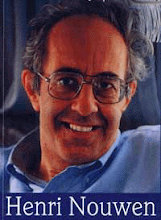
Henri Nouwen writes in his book, The Way of the Heart . . . “This observation leads us straight to the core of the problem [why we don’t love as we should]. Our society is not a community radiant with the Love of Christ, but a dangerous network of domination and manipulation in which we can easily get tangled and lose our soul.”

To care for the poor and to love each other as Christ loves us apparently goes against the very fabric of all our human organizations and structures. Domination and manipulation is the rule as Henri Nouwen so astutely points out. However, the Desert Fathers encourage us to bail out of the boat, to swim on our own and embrace a new paradigm - the merciful, forgiving, patient and compassionate love of Christ. When we do this, we will transcend the world's system and as Paul puts it, "we are above the law." Love is both above the law and the fulfillment of the law. (cf. Romans 13:8-10)
_______________

Please take a moment to donate online to Homeless In America's Thanksgiving StreetReach for homeless living under the bridges and in alleyways. There is a need for water sponsors, $20 - food sponsors, $125 and monthly sponsors are needed for van insurance $50 and operation/upkeep $300. God bless you for your compassion and help for the 1000s of Homeless we serve. Kindness and compassion in increments of $10 at - http://www.servantsofthefather.org/donation_homeless

Don't forget to scroll down and vote in the polls!