Total Pageviews

Tuesday, February 2, 2010

We are not God!

by
Jean Vanier

"I think fundamentally we're all lonely but we cover up our loneliness. What I have lived is anguish and I think we all live anguish. Anguish is inner agitation. It affects sleep. I think that we are called to discover anguish. You see, anguish is the reality of human beings because we are not God. We haven't all the power in us. We haven't got all the resources that we need. We are people who are mortal and, therefore, there is an element of disintegration which is inside all of us. But we are very frightened of mortality. We're frightened of anguish so we cover it up. We go into the world of dreams or we go into the world of work. We become workaholics. We're frightened of touching."

Jean Vanier is the son of the late Governor General of Canada. He served in both the British and the Canadian Royal Navies, and in 1950 left the navy to study and teach philosophy in Paris, France. There, through his friendship with a Dominican priest, Father Thomas Philippe, he became aware of the plight of thousands of people institutionalized with mental disabilities. Jean felt God's call to do something about it, and invited two men to leave the institutions where they were living and share their lives with him in a real home. That simple act was the beginning of an international movement called L'Arche, French for "The Ark"— a network of more than 100 faith-based communities in 30 countries. At L'Arche, men and women with mental disabilities live together with their care givers in loving and spirit-filled homes.
____________
Please Subscribe! to Homeless In America and become a hero's voice of the poor. Invite your family and friends to Subscribe! The top right column of the main page. Scroll down and vote in the polls.

Monday, February 1, 2010

Henrietta could have Asked Obama to Fill up the Gas Tank Too!

In spite of the frequent playing of politics in the nation's capitol, every now and again someone comes out a winner. That's exactly what happened to Henrietta Huges (photo) and her son living homeless in the Sunshine State. Last year, a story emerged from a Town Hall Meeting in Fort Myers, FL where [Henrietta] Hughes was offered a home by Chene Thompson, wife of Florida State Representative Nick Thompson, who heard the homeless woman’s pleas for help to President Obama before a local and national crowd.

The house, said to be worth $150,000 is in LaBelle, Florida the first home Thompson bought after law school. She told Hughes, “Just give me the opportunity to help you.”

Hughes broke down in front of thousands when she told the president that she and her son have been homeless for more than a year. They are living in a pickup truck.

On the flip side of the story, Blogger Michelle Malkin, in a story on her Web site TownHall.com said that if Hughes "had more time, she probably would have remembered to ask Obama to fill up her gas tank, too." Politics aside, at least two people now have a home of the 3.5 million this year that will be homeless in America.
____________
If you have not done so already, please Subscribe! to Homeless In America and become a hero's voice of the poor. Invite your family and friends to Subscribe! The top right column of the main page. Scroll down and vote in the polls.

Saturday, January 30, 2010

Grace is a Gift, it is not Given for Innocence nor Withheld for Sin

from
The Cloud of Unknowing

If you ask me just precisely how one is to go about doing the contemplative work of love, I am at a complete loss. All I can say is I pray that Almighty God in his great goodness and kindness will teach you himself. For in all honesty I must admit I do not know. And no wonder, it is a divine activity, and God will do it in whomever he chooses. No one can earn it. Paradoxical as it may seem, it would not ever occur to a person - no, nor to an angel or saint - to desire contemplative love were it not already alive within him. I believe too, that our Lord deliberately chooses to work in those who have been habitual sinners rather than in those who, by comparison, have never grieved him at all. Yes, he seems to do this very often. For I think he wants us to realize that he is all-merciful and almighty, and that he is perfectly free to work as he pleases, where he pleases, and when he pleases.

Yet he does not give his grace nor work this work in a person who has no aptitude for it. But a person lacking the capacity to receive his grace could never gain it through his own efforts either. No one at all, neither sinner nor innocent, can do so. For this grace is a gift, and it is not given for innocence nor withheld for sin.

The Cloud of Unknowing was written in Middle English by an unknown mystic of the fourteenth century.
____________
If you have not done so already, please Subscribe! to Homeless In America and become a hero's voice of the poor. Invite your family and friends to Subscribe! The top right column of the main page. Scroll down and vote in the polls.

Thursday, January 28, 2010

Consumed by Burning Charity

Pier Giorgio Frassati, [See “Saint GQ” Thursday, January 14, 2010] just before receiving his university degree contracted polio, which doctors later speculated he caught from the sick whom he tended. Neglecting his own health because his grandmother was dying, he died after six days of terrible suffering on July 4, 1925 at the age of 24. His last concern was for the poor. On the eve of his death, with a paralyzed hand, he scribbled a message for a friend remembering the injections for Converso, a poor man he had been assisting.

His funeral was a triumph: the streets of the city were lined with a multitude of mourners, unknown to his family -- the poor and the needy whom he had served so unselfishly for seven years. Many of these poor people, in turn, had been surprised to learn that the saintly young man they knew was the heir of the Frassati family fortune.

As we remember Pier Giorgio, may the inspiration of his words and example live on in our own lives today . . .

"Jesus comes to me every morning in Holy Communion: I repay him in my very small way by visiting the poor".

"Seeing daily the faith with which families often bear the most atrocious sufferings, their constant sacrifices, and that they do all this for the love of God often makes us ask why I, who have so many things from God, have always been so neglectful, so bad, while they, who have not been privileged like me are infinitely better than me?"

"We have the duty of putting our [good] health at the service of those who do not posses it. To act otherwise would be to betray the gift of God."

One of his favorite ministries was the Cottolengo Hospital (a medical facility for the physically and mentally handicapped). He would wander thorough the corridors with a secure and steady spirit of charity consoling the wretched. He would stop to talk to each patient as though they were really his brothers. He would bring them money, candy and clothes and would never forget to kiss them with warm affection as though they were the closest of friends, not even stopping to think of the possible risk of infection or having any hint of human repulsion.

Amazed, people saw this young man drag hand carts through the streets of Turin filled with household goods of the poor who were looking for a home. He would enter the most squalid houses and give all the money he had so that he did not have enough money to take the bus home.

Pier Giorgio Frassati was declared “Blessed” by John Paul II who said of him, “[He was] passionately eager to serve brothers and consumed by burning charity which led him to approach, in order of absolute precedence, the poor and the sick.” John Paul II-Turin, April 15,1980
_______________
The next StreetReach days helping the homeless living on our very own American streets are coming this weekend. Please partner with us to sponsor water ($20), van insurance ($50), Bibles ($75), and there is an urgent need for van upkeep. Donate at: http://www.servantsofthefather.org/donation_homeless or post checks to - Servants of the Father of Mercy, Inc., P.O. Box 42001, Los Angeles, CA 90042.
All Donations are Tax Deductible

Tuesday, January 26, 2010

The Humiliation of Christ is our Humiliation

The humiliation of Christ – for he was insulted, spat upon and mocked. His humiliation is our humiliation too, if we let it.
The humiliation of Mary – for a mother’s heart that ached as her son was derided and executed as a criminal. Her humiliation is our humiliation too, if we let it.
The humiliation of the homeless – dumpster diving, they are hated, despised, rejected and counted as losers. Their humiliation is our humiliation too, if we let it.

To Christ our saving Hero, we say:

R Lord, hear the cry of our prayer!

You came for the last, the lost, the poor and the least:
- carry the needy to safety. R

You preferred the company of the broken and the outcast:
- heed the lives of the rich and powerful, that they may discover the gift of suffering for your sake.

You saved us from the ravages of evil by taking upon yourself the sins of the world:
- defend those who are abused, abandoned and oppressed.

You gave your life as a ransom for many:
- rescue those who have believed in you, but have died with unforgiveness or hate in their hearts, and now remain homeless, have mercy, Lord.

The Humiliation of Christ
Now, it was the third hour of the day when they crucified him. The written notice of the charge against him read: “The King of the Jews.” Those who passed by hurled insults at him, shaking their heads and saying, "So! You who are going to destroy the temple and build it in three days, come down from the cross and save yourself!" In the same way the chief priests and the teachers of the law mocked him. "He saved others," they said, "but he can't save himself! Let this Christ, this King of Israel, come down now from the cross, that we may see and believe." [One who was] crucified with him also heaped insults on him. Mark 15:25-32
___________
If you have not done so already, please Subscribe! to Homeless In America and become a hero's voice of the poor. Invite your family and friends to Subscribe! The top right column of the main page. Scroll down and vote in the polls. List yourself as a blog "Follower" in the middle right column.

Monday, January 25, 2010

What Could You Live Without?

The Power of Half

On Saturday, The New York Times columnist Nicholas Kristof reports a story about Kevin Salwen, a writer and entrepreneur in Atlanta, was driving his 14-year-old daughter, Hannah, back from a sleepover in 2006. While waiting at a traffic light, they saw a black Mercedes coupe on one side and a homeless man begging for food on the other.

“Dad, if that man had a less nice car, that man there could have a meal,” Hannah protested. The light changed and they drove on, but Hannah was too young to be reasonable. She pestered her parents about inequity, insisting that she wanted to do something. “What do you want to do?” her mom responded. “Sell our house?”

Warning! Never suggest a grand gesture to an idealistic teenager. Hannah seized upon the idea of selling the luxurious family home and donating half the proceeds to charity, while using the other half to buy a more modest replacement home.

Eventually, that’s what the family did. The project — crazy, impetuous and utterly inspiring — is chronicled in a book by father and daughter scheduled to be published next month: “The Power of Half.” It’s a book that, frankly, I’d be nervous about leaving around where my own teenage kids might find it. An impressionable child reads this, and the next thing you know your whole family is out on the street.

At a time of enormous needs in Haiti and elsewhere, when so many Americans are trying to help Haitians by sending everything from text messages to shoes, the Salwens offer an example of a family that came together to make a difference — for themselves as much as the people they were trying to help.

The Salwens pledged $800,000 to the Hunger Project to sponsor health, microfinancing, food and other programs for about 40 villages in Ghana. They traveled to Ghana with a Hunger Project executive, John Coonrod, who is an inspiration in his own right. Over the years, he and his wife donated so much back from their modest aid-worker salaries that they were among the top Hunger Project donors in New York.

The Salwens also are troubled that some people are reacting negatively to their project, seeing them as sanctimonious showoffs. Or that people are protesting giving to Ghana when there are so many needy Americans.

Still, they have inspired some converts. The people who sold the Salwens their new home were so impressed that they committed $100,000 to the project. And one of Hannah’s closest friends, Blaise, pledged half of her baby-sitting savings to an environmental charity.

In writing the book, the Salwens say, the aim wasn’t actually to get people to sell their houses. They realize that few people are quite that nutty. Rather, the aim was to encourage people to step off the treadmill of accumulation, to define themselves by what they give as well as by what they possess. Said Hannah, “Everyone has too much of something, whether it’s time, talent or treasure. Everyone does have their own half, you just have to find it.”
___________
If you have not done so already, please Subscribe! to Homeless In America and become a hero's voice of the poor. Invite your family and friends to Subscribe! The top right column of the main page. Scroll down and vote in the polls.

Saturday, January 23, 2010

The Surefire Way to End Homelessness - Pass it on!

At Homeless In America there is frequent talk here about how in one sense we are all homeless. All of us are beggars and migrants on a pilgrimage home. In that case, the physically homeless living on American streets are important signs, symbols and images of what and who we all are. We need them to show us the truth about ourselves. Saint Augustine said it well about us lost and abandoned humans, “My soul is restless until it rests in Thee.” The psalmist David also expressed it this way, “O God, you are my God, for you I long, for you my soul is thirsting. My body pines for you like a dry, weary land without water” (Psalm 63:1).

If we are parched, destitute and homeless, what does “homefullness” look like? Where is home? Rest assured “homefullness” does not happen here in this lifetime. The apostle John unequivocally tells us that everything here is passing away. In fact, nothing on earth we can call home. John greatly underscores the notion of being perpetually transient when he said, “The world is passing away, and also its lusts; but the one who does the will of God lives forever.” (1 John 2:17)

The good news is that homefullness does exist. Receiving a permanent dwelling place and arriving home happens at some point after the death of a Christian. Jesus refers to our transition from homelessness on earth to homefullness in the next life when he said, “In my Father's house are many mansions: if it were not so, I would have told you. I go to prepare a place for you.” (John 14:2)

End homelessness? Let’s begin each with our own self. Homefullness is contingent upon faith in Christ, but not just a mental faith. (“Even the demons believe, and they tremble in terror.” James 2:19) Mental faith won’t save you says the Apostle. Each of us needs to have an active faith filled with . . . forgiveness of one’s enemies (think, The Lord’s Prayer), show mercy daily to others for “Blessed are the merciful, they shall receive mercy” (Matthew 5:7), as well as lots of daily prayer and contrition for one’s sins, failures and shortcomings. So there it is. End homelessness – get faith in action! Get right with God!

Was this blog helpful? Please pass it on and invite your family and friends to Subscribe! in the top right column.
___________
If you have not done so already, please Subscribe! to Homeless In America and become a hero's voice of the poor. Invite your family and friends to Subscribe! The top right column of the main page. Scroll way down and vote in the polls. Donate today to support food, water and other supplies for a homeless outreach coming up January 30th at http://www.servantsofthefather.org/donation_homeless All donations are tax deductible.

Friday, January 22, 2010

The Pros and Cons of Panhandling, Real Quotes from Real People

Nashville’s, The Tennessean newspaper asked readers what they thought should be done about people who panhandle on the streets. Following are excerpts from their comments . . .

*It bothers me that so many downtowners, especially the newcomers moving in, are so ticked off at those less fortunate than they. When knocking panhandling, these folks are really annoyed by all homeless persons and want them to go away.

*It seems to be the norm today to discriminate, but to blame the homeless for being homeless is the worst kind of bigotry.

*Aren't we all beggars? How many persons do we know today who are asking for all kinds of favors — from their schools, their employers, from the government and others? What do you think all those candidates for political office are doing? They wouldn't get very far without asking for help and money. …

*While these issues must be approached with compassion, giving money to panhandlers is not the needed solution. While money donated to worthy charities or social services is applied directly to helping people, money given to panhandlers is usually spent on alcohol or drugs and simply enables these people to continue bad behaviors.

*Panhandlers tend to congregate where their behaviors are rewarded and avoid areas where they receive no handouts. G. G., downtown businessman.

*Some people just don't want to support themselves or their addictions, so they tend to rely on other people for their support, thinking that the world owes them something.

*Anyone caught panhandling anywhere should be written a citation and have to appear in court and possibly be brought up on charges. I think that would decrease the panhandling. O. H.

*Panhandling is not a Nashville thing. It's a national thing. It's everywhere. What to do about it? Your guess is as good as mine.

*Me personally, if I can give, I do. If I can't, I don't. Some people lose more change in their couch. What's a little change? S. P.

*Normally, I have a "no-cash" policy. If the person asking for help says he needs a few dollars for a meal, I have offered to walk over to Wendy's or the nearest restaurant to order something for that person. I have bought bus fare for people, too.
___________
If you have not done so already, please Subscribe! to Homeless In America and become a hero's voice of the poor. Invite your family and friends to Subscribe! The top right column of the main page. Scroll down and vote in the polls.

Thursday, January 21, 2010

Escape a Chatty Society to Find Love in the Silence

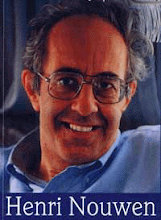
By Henri Nouwen

One of the main problems is that in this chatty society silence has become a fearful thing. For most people silence creates itchiness and nervousness. Many experience silence not as full and rich, but empty and hollow. For them silence is like a gaping abyss which can swallow them up. As soon as a minister says during a worship service, “Let us be silent for a few moments,” people tend to become restless and preoccupied with only one thought: “When will this be over?” Imposed silence often creates hostility and resentment. Many ministers who have experimented with silence in their services have soon found out that silence can be more demonic than divine and have quickly picked up the signals that we’re saying: “Please keep talking.” It is quite understandable that most forms of ministry avoid silence precisely so as to ward off the anxiety it provokes.

But isn’t the purpose of all ministry to reveal that God is not a God of fear but a God of love? And couldn’t this be accomplished by gently and carefully converting the empty silence into a full silence, the anxious silence into a peaceful silence, and the restless silence into a restful silence, so that in this converted silence a real encounter with the loving Father could take place? What a power our word would have if it could enable people to befriend their silence! (Henri Nouwen, The Way of the Heart, New York: Ballantine Books,1981, pp. 52-53.)
___________
Please Subscribe! to Homeless In America and become a hero's voice for the poor. Invite your family and friends to Subscribe! The top right column of the main page. Scroll down and vote in the polls.

Wednesday, January 20, 2010

The Movers & Shakers of the Financial Community Trading Places in New York

The New York City Rescue Mission on 9/11

On that terrible day, September 11, 2001, the New York City Rescue Mission's executive director Jim VarnHagen and his wife, Anita, were in their car at the entrance to the Holland Tunnel when the planes hit the World Trade Center. Everything was immediately shut down and traffic was rerouted back into New Jersey. VarnHagen called the Rescue Mission on his cell phone and said to print up handbills announcing that the mission was open to help anyone that needed it. They immediately posted the notices on buildings and lamp posts as near to the World Trade Center as possible. Hundreds of men and women came, many without shoes, clothing ripped from their backs and covered with white dust.

What was remarkable about the event was the role reversal. Instead of the rich and powerful ministering to the homeless, it was the poor broken residents of the New York City Rescue Mission that printed up and posted the handbills. Then, when the victims streamed in, many of them movers and shakers in the financial community this group of humble, homeless men got them into hot showers, clothed them, fed them, prayed with them and hugged them. "No one rejected prayer that day," said VarnHagen.
___________
If you have not done so already, please Subscribe! to Homeless In America and become a hero's voice of the poor. Invite your family and friends to Subscribe! The top right column of the main page. Scroll down and vote in the polls.